
Speech-to-Text AI in Action: Top 10 Use Cases Across Industries

Automatic Speech Recognition (ASR) has quickly moved from being a futuristic idea to something many of us use daily without even thinking about it. Whether you’re asking Siri for directions, joining a Zoom call with live captions, or watching a subtitled video on YouTube, ASR is working in the background to make life easier. It’s more than just turning voice into text- it’s about making technology more natural, inclusive, and efficient.
In this article, we’ll look at the top 10 real-world use cases of Automatic Speech Recognition (ASR) across industries, exploring how businesses, healthcare providers, educators, and even governments are putting it to work.
What is Automatic Speech Recognition (ASR)?
Automatic Speech Recognition (ASR) is the technology that allows machines to listen to spoken language and transcribe it into text. It relies on acoustic modeling, natural language processing (NLP), and machine learning algorithms to capture meaning with high accuracy, even when speech is fast, accented, or happens in noisy environments.
Think of ASR as the bridge that lets humans and machines communicate more naturally. Today, it powers voice assistants like Amazon Alexa, transcription services like Otter.ai, and call center analytics tools from providers such as Genesys and Five9
Why Industries are Turning to ASR
ASR adoption is booming for a few key reasons:
- Time savings: Faster note-taking, documentation, and data entry.
- Accessibility: Opening up content to people with hearing or language barriers.
- Scalability: Supporting customer service and education at large scale.
- Insights: Turning conversations into data that can be analyzed and acted on.
Top 10 Use Cases of Automatic Speech Recognition (ASR)
1. Healthcare: From Dictation to Digital Records
Doctors often spend hours filling out forms and updating patient files. With ASR, they can simply dictate notes while focusing on the patient. Tools like Nuance Dragon Medical seamlessly transfer spoken words into electronic health records (EHRs).
How it works:
Doctors dictate notes directly into Electronic Health Record (EHR) systems. Specialized ASR handles complex terminology and can be noise-robust to filter out hospital sounds.
Why it matters:
- Doctors spend more time with patients, less on paperwork.
- Patient records become more complete and accurate.
- Hospitals save money on transcription services.

2. Customer Support: Smarter Call Centers
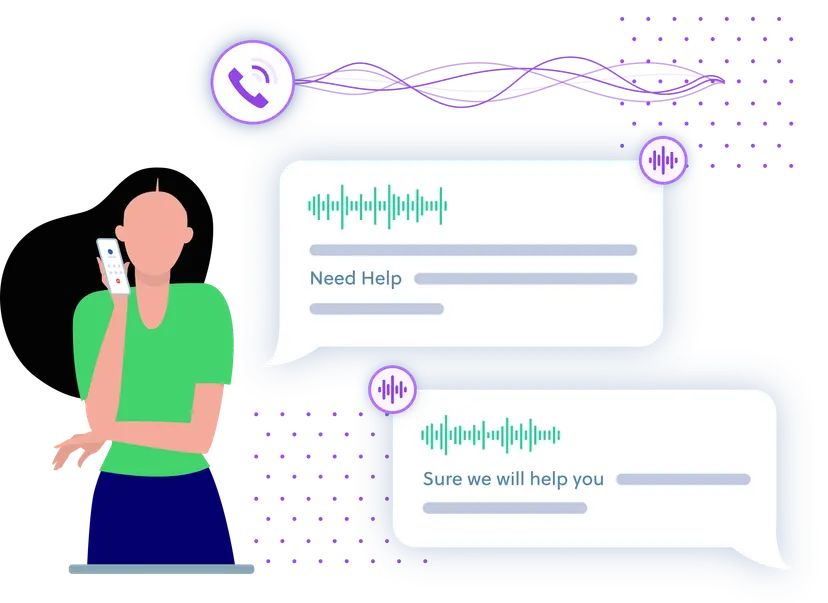
We’ve all had long customer service calls where details get lost. ASR helps by transcribing conversations in real time, making it easier for agents to find solutions and for companies like Zendesk and Salesforce Service Cloud to analyze call patterns.
How it works:
ASR transcribes customer-agent calls in real time. This transcription allows for immediate analysis of intent and sentiment.
Why it matters:
- Agents get real-time prompts, improving resolution times.
- Calls can be reviewed for compliance and quality.
- Customers feel heard and supported.
3. Education: Learning Without Barriers
From university lectures to online courses, ASR is transforming education. Platforms like Coursera and Khan Academy use it to provide captions, while universities integrate it into learning management systems. Students get real-time captions for lectures, a game-changer for those who are deaf, hard of hearing, or learning a second language.
How it works:
ASR provides real-time captions and transcripts for lectures, online courses, and videos on platforms like Coursera.
Why it matters:
- Improves accessibility and inclusivity.
- Helps students review content later.
- Supports global learning by enabling translated captions.
4. Media & Entertainment: Subtitles at Scale
Streaming platforms like Netflix and YouTube rely on ASR to generate captions and subtitles. Podcasters use services like Rev.ai and Descript to get quick transcripts for episodes. Content creators benefit from transcripts that boost discoverability.
How it works:
ASR generates captions and subtitles for video content (Netflix, YouTube) and transcripts for podcasts (Rev.ai, Descript).
Why it matters:
- Audiences worldwide can enjoy content in their language.
- Transcripts improve SEO and discoverability.
- Creators save time compared to manual captioning.
5. Legal Industry: Streamlining Court Records
Court proceedings and legal meetings generate huge volumes of spoken content. ASR provides fast, reliable transcriptions that lawyers and clerks can reference. Companies like Verbit specialize in legal transcription powered by ASR.
How it works:
ASR transcribes court proceedings, depositions, and legal dictations, often utilizing specialized vocabulary models.
Why it matters:
- Accurate records for hearings and depositions.
- Faster preparation for cases.
- Lower costs compared to human stenographers.
6. Banking & Finance: Safer and Smarter Calls
Banks like JPMorgan Chase and HSBC use ASR to monitor customer conversations, flag potential fraud, and ensure compliance with regulations. Real-time alerts can stop fraudulent activity before it escalates.
How it works:
ASR transcribes customer calls to monitor conversations, check for regulatory compliance, and flag keywords related to fraud.
Why it matters:
- Protects banks and customers from scams.
- Ensures regulatory compliance.
- Creates searchable, auditable records.
7. Retail & E-commerce: Voice-Powered Shopping
“Alexa, order my groceries.” Voice shopping is becoming part of everyday life, thanks to ASR. Retail giants like Walmart and Amazon use ASR to make browsing, ordering, and reordering products effortless.
How it works:
ASR interprets a shopper’s spoken requests (e.g., “Alexa, order my groceries”) and translates them into a machine-actionable product search or order command.
Why it matters:
- Makes shopping faster and more convenient.
- Encourages impulse buys with easy ordering.
- Builds loyalty through personalized experiences.
8. Transportation: Talking to Your Car
Car makers like Tesla, BMW, and Mercedes-Benz embed ASR in vehicles, allowing drivers to ask for directions, control entertainment, or call someone without touching a screen.
How it works:
ASR is embedded in vehicle systems (e.g., Tesla, BMW) to interpret spoken commands for navigation, entertainment, and communication.
Why it matters:
- Improves safety by reducing distractions.
- Enhances the driving experience.
- Connects seamlessly with smart home devices.
9. Government & Public Services: Connecting with Citizens
Governments worldwide use ASR to make services more inclusive. For example, the UK Parliament provides live captions for debates, and U.S. public schools use ASR for accessibility in classrooms.
How it works:
ASR is used to provide live captions for public events, legislative debates (e.g., UK Parliament), and multilingual citizen services.
Why it matters:
- Ensures accessibility for all citizens.
- Strengthens transparency and engagement.
- Bridges communication gaps in multilingual regions.
10. Business Productivity: Smarter Meetings
We’ve all sat through meetings where key points get lost. ASR tools like Otter.ai, Zoom, and Microsoft Teams automatically transcribe meetings, making them searchable and easy to review.
How it works:
Tools like Otter.ai and Microsoft Teams use ASR to automatically transcribe meeting audio in real-time or asynchronously.
Why it matters:
- Captures ideas without interrupting the flow.
- Reduces the need for manual note-taking.
- Improves team collaboration.
The Future of Automatic Speech Recognition (ASR)
ASR technology is evolving rapidly. With AI-driven improvements in accuracy, multilingual support, and even emotion detection, we’re moving toward a future where machines don’t just understand our words, but also our intent and tone.
Imagine Google Translate providing instant speech-to-speech translation across dozens of languages, or AI assistants that can sense frustration and adjust their tone. That’s the future ASR is helping to build.
Conclusion
Automatic Speech Recognition (ASR) is no longer just a handy feature- it’s becoming an essential part of how industries operate. From healthcare and education to retail and government.
- ASR is making communication faster, fairer, and more effective.
- As adoption grows, ASR will continue to shape a future where technology listens better and serves us more seamlessly.

Bio: Harish Kumar is a data-driven professional with 3.7+ years of experience in analytics and product management, having worked across startups like Noon, Zomato, and Junglee Games. He specialises in turning data into actionable insights, driving growth, and building scalable systems from the ground up. Passionate about solving complex business problems and creating measurable impact, he currently explores opportunities in analytics, product strategy, and business growth.